A stair marking is a visual device and it is judged on contrast, width and continuity, in that order. A band of exactly the right width in a colour that does not contrast is not a marking.
How to mark a stair edge
checked 2026-09-16rots yes — the figures above move with the editionkept by The Nosing Line (a named line, not a person)
The published widths
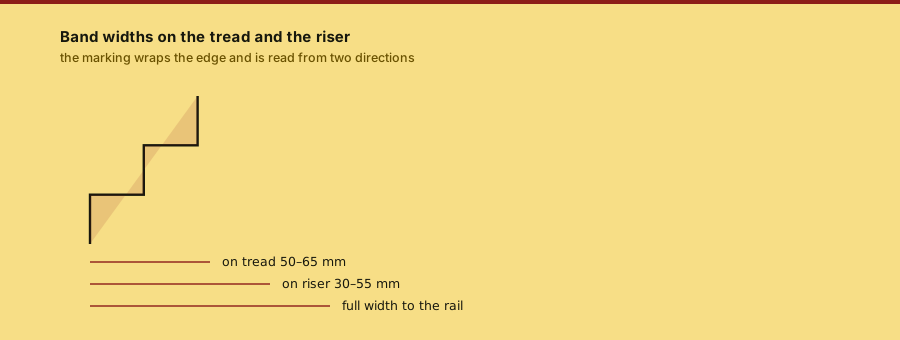
The British approved document gives the clearest published figure for a stair edge marking, and it applies to common access areas in buildings containing flats. Step nosings are to be made apparent with a material that contrasts visually, 50 to 65 mm wide on the tread and 30 to 55 mm on the riser. The two bands are different because the marking wraps the edge and is seen from two directions.
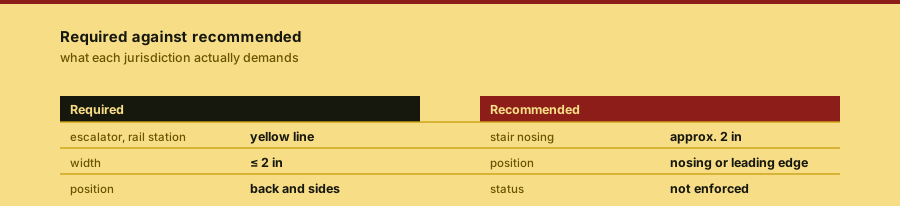
The American accessibility standards treat contrast on a nosing as a recommendation rather than a requirement and give approximately 2 inches as the width, placed either on the nosing or at the leading edge of the tread. Where it is required rather than recommended — an escalator in a rail or fixed guideway station — the yellow demarcation line is capped at 2 inches wide and runs along the back and the sides of the step.
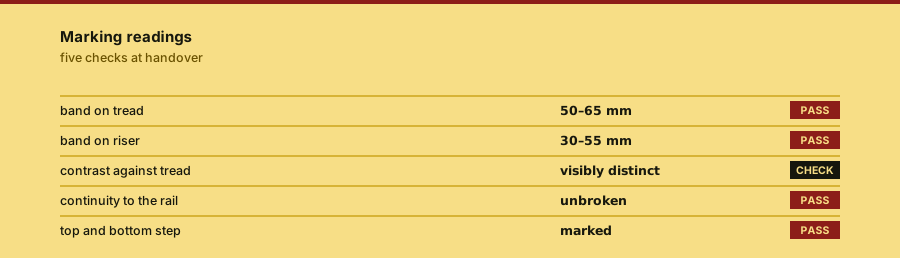
- Establish whether contrast is required or recommended in the jurisdiction. If it is only recommended, say so in the record rather than presenting it as a defect.
- Choose the band colour against the tread surface, not against the wall. The ratio that matters is band against tread.
- Set the band width on the tread within the published range and the band width on the riser within its own range. They are not the same range.
- Run the band the full clear width of the tread and stop at the handrail, not behind it.
- Mark the top and the bottom step as well as the intermediate ones where the jurisdiction recommends it. The top and bottom steps are where the change in level is least expected.
- Check the band after cleaning. A band applied over a contaminated surface lifts at the edges and reads as a gap.
- Record the band product, the width used, the surface it was applied to and the date.
Why width alone is not enough
A band that meets the width requirement and sits on a surface of similar tone is invisible at the distance that matters, which is the top of a flight in poor light. A band that meets the width and contrast requirements but stops short of the handrail leaves a gap exactly where a person's foot lands when they use the rail. Both failures are visual and neither shows up on a dimensional check.
Marking is not a substitute for geometry. A flight with a non-uniform riser is not made safe by a contrast band, and a band that has been installed to distract from a geometry problem is the worst use of this page. Fix the geometry, then mark the edge.
Where the marking belongs
The edge itself is owned by the nosing page and the tactile strip by the indicator page. This page owns the visual marking and the widths it is held to.
Documents checked
- 1Conspicuity of staircase configuration: Effects of markings and contrastsupports the evidence that contrast and marking change how a stair configuration is read
- 2Safer Stairs: Building Towards Change (RoSPA)supports the campaign case for making a stair edge apparent
- 3NIOSH Publication 2011-202: Slip, Trip, and Fall Prevention for Healthcare Workerssupports the guidance on preventing the falls that a marking is meant to reduce
Each line points at one specific document, with its own title as the link text. No line is a home page and no line is a search result.
File this and go Close this page once the band is measured against the tread it sits on. Contrast first, width second.