A landing is a place to stop. Its length is fixed, its trigger is not, and the case that fails inspection is almost always a door swinging onto the top of a flight.
Landing: where it is required and how long it must be
checked 2026-09-16rots yes — the figures above move with the editionkept by The Nosing Line (a named line, not a person)
The trigger, which is the part that differs
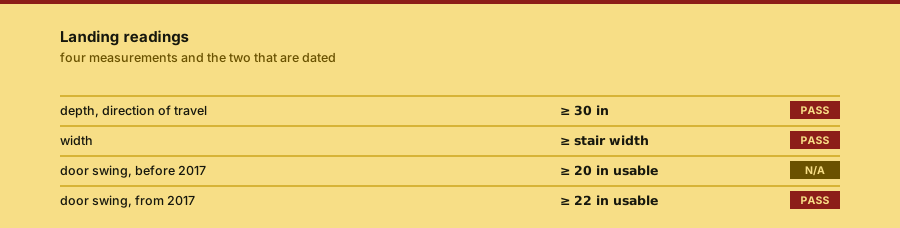
The American workplace rule requires landings and platforms that are at least the width of the stair and at least 30 inches deep, measured in the direction of travel. It does not say how many risers are allowed before a landing is required, because the rule is written around the stair you actually have rather than the stair you are designing.
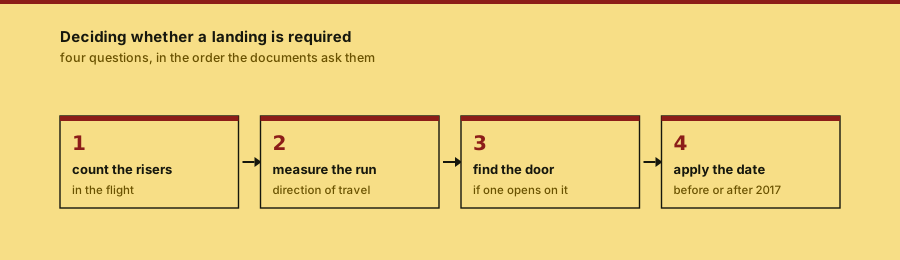
The British approved document works the other way. It links landings to the flight: landings are required, and a flight is limited in the number of risers it may contain, so the landing requirement arrives through the flight length rather than through a separate landing clause.
| Document | Landing depth | What triggers one |
|---|---|---|
| 29 CFR 1910.25(b)(4) | ≥ 30 in, ≥ stair width | landings and platforms generally |
| Approved Document K | see Section 1 | flight length limit |
| NCC 2022 Part D3 | see D3D15 | maximum 18 risers in a flight |
| ADA §505.10 | n/a | handrail extension at each landing |
The door swing
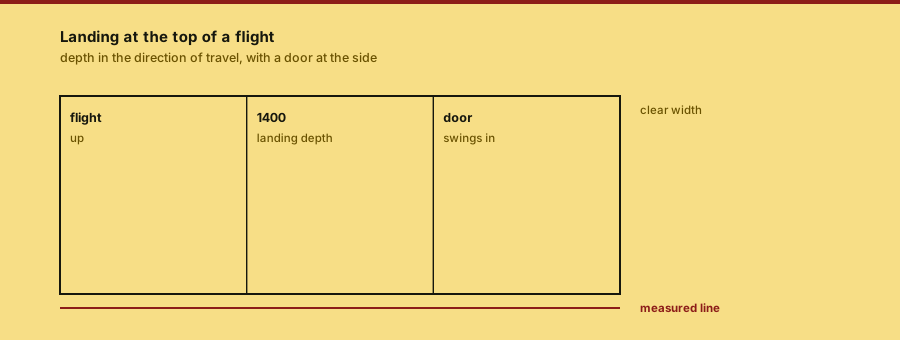
A door that opens directly onto a stairway is the case the workplace rule spends the most words on. A platform must be provided, and the swing of the door must not reduce the platform's effective usable depth below 20 inches for platforms installed before 17 January 2017, or 22 inches for platforms installed on or after that date. That date matters: a stair built in 2015 and one built in 2018 are held to different numbers for the same geometry.
The British document approaches the same problem from the other end and prints a minimum of 400 mm between the door and the top or bottom riser in a dwelling, which is a smaller figure for a lighter-traffic building.
Landing length is measured in the direction of travel, not along the width. A landing is not the same as a floor: the clause applies to the level part between flights, and a floor that happens to be level is not a landing.
Owned elsewhere
The width a landing must clear is owned by the egress width page. The handrail extension that arrives at a landing is owned by the handrail page. This page owns the landing and its length.
Documents checked
- 1eCFR :: 29 CFR 1910.36 -- Design and construction requirements for exit routessupports the exit-route design requirements a landing sits inside
- 2Approved Document K -- Part K -- Protection from falling, collision and impact (Planning Portal)supports the UK approved document that carries the landing and door-swing guidance
- 3Part D3 Construction of exits -- NCC 2022 Volume Onesupports the Australian limit on risers in a flight, which is what triggers a landing
Each line points at one specific document, with its own title as the link text. No line is a home page and no line is a search result.
File this and go Close this page once you have the landing depth in the direction of travel. The door swing is the next reading, and it is the one that fails.