The dry reading is higher, the wet reading is the one the band was written for, and a specification that quotes the dry number has quoted a condition the floor will not be in when it matters.
Wet and dry on one tile: two readings, one specification
written 2026-07-16kept by The Nosing Line (a named line, not a person)
What was measured
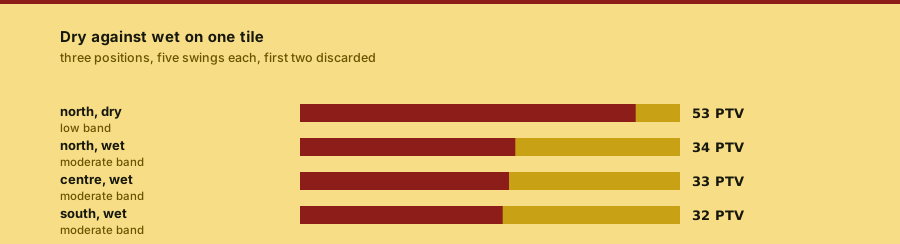
A ceramic floor tile in a plant room, measured with the pendulum at three positions in dry condition and then at the same three positions with a film of clean water. The slider was the shod slider in both passes, and five swings were taken at each position with the first two discarded.
| Position | Dry | Wet | Band change |
|---|---|---|---|
| north end | 53 | 34 | low to moderate |
| centre | 52 | 33 | low to moderate |
| south end | 51 | 32 | low to moderate |
Why only one of them belongs in a specification
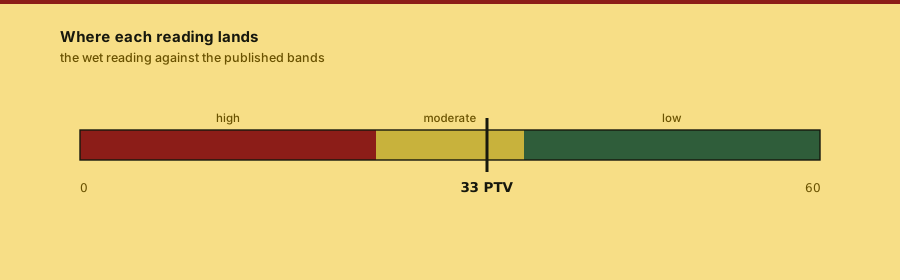
The published bands are given for water-wet conditions, and the same document publishes a separate roughness band that is explicitly applicable to water-wet pedestrian areas. A dry reading is a real measurement of a real condition and it is not the condition the band describes. Quoting the dry figure in a specification is quoting a number that will not be reproduced on any day the floor is wet, which is the only day the specification exists for.
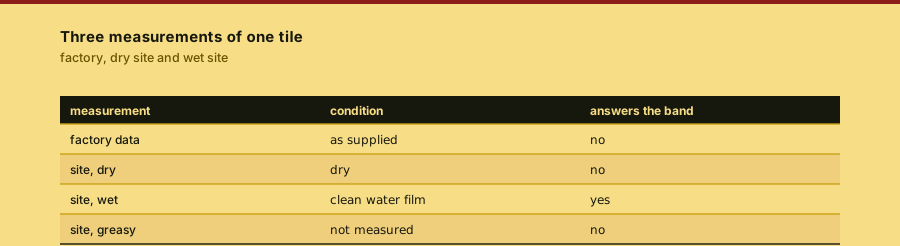
The guidance also notes that most slip-resistance data supplied by manufacturers is produced on as-supplied product and that slipperiness changes after installation. So a factory figure, a dry site reading and a wet site reading are three measurements of three conditions, and only the last one answers the question the band asks.
The roughness measurement is the cheaper of the two instruments and the guidance notes that it gives a good indication in water-contaminated conditions. Where a full pendulum reading is not practical, a roughness reading taken wet is a defensible substitute for a screening decision, and it is not a substitute for a specification reading.
The sentence a practitioner may dispute
A tile that reads 33 wet is not a tile that needs replacing, because the moderate band is not a failure and the band boundary is not a threshold of safety. The published model puts contamination, footwear, cleaning and behaviour alongside the surface, and a floor in the moderate band with a good cleaning regime is a better floor than one in the low band with a bad one. Arguing the other way, from the number alone, is common and it is wrong.
What this note does not cover
It does not cover the same tile with a different contaminant. The guidance is explicit that different contaminants need different levels of roughness, so a reading taken wet with clean water says nothing about the same tile under grease. That measurement has not been made here.
Documents checked
- 1Slips and trips -- construction safety topic (HSE)supports the construction-sector slip guidance that a wet reading is taken against
- 2Work at height (HSE)supports the work-at-height framework that a stair slip assessment is filed inside
- 3Falls from height: A brief guide (HSE INDG401)supports the brief guide that frames a fall as the outcome a wet surface produces
Each line points at one specific document, with its own title as the link text. No line is a home page and no line is a search result.
File this and go Close this note once you know which condition the band you are quoting was published for. The other reading is a different measurement.