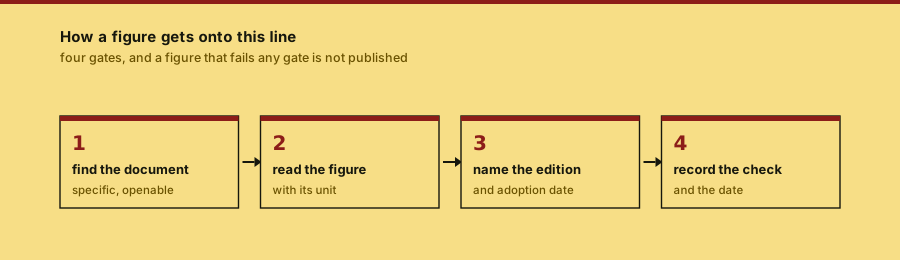
Every figure here carries its unit, the document it came from and the edition in force on the day it was checked; a number without those three is not published.
How we check: how this line reads a stair clause
checked 2026-09-16kept by The Nosing Line (a named line, not a person)
Where the figures come from
Every number on this line is one of five things: a projection in millimetres, a rise or a going in millimetres, a clear width in millimetres, an angle in degrees, or a slip figure on a named scale. A figure missing its unit is not published here. A figure missing the document it came from is not published here either.
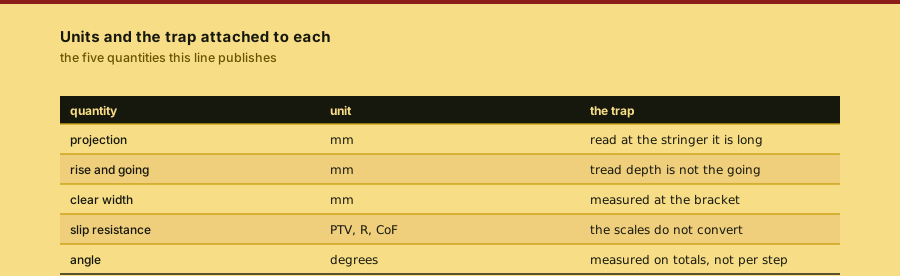
Units and the trap that goes with each
| Quantity | Unit | The trap |
|---|---|---|
| Nosing projection | millimetres | read at the stringer it reads long; read it at the walk line |
| Rise and going | millimetres | a tread depth is not a going; the going runs nosing to nosing |
| Clear width | millimetres | measure at the handrail bracket, not the rail |
| Slip resistance | PTV, R scale, coefficient | the scales do not convert into one another |
| Angle | degrees | computed on the totals, not on one step |
How a document is admitted
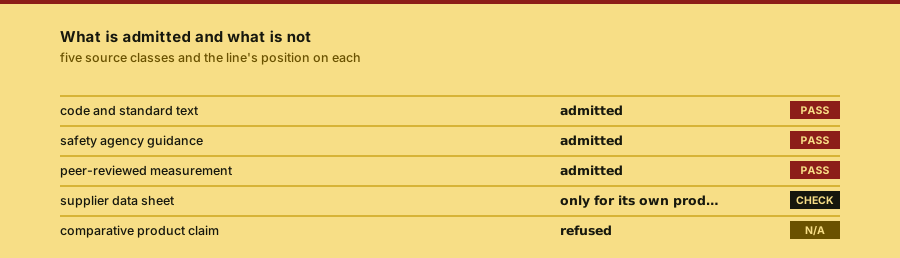
A document is used only if it is a specific publication that supports a specific sentence on the sheet, and only if it can be opened. Code text, safety-agency guidance and peer-reviewed measurement are preferred, because each of them publishes its method. Supplier material is admitted only where the supplier is describing its own product or its own practice, and never for a comparative claim.
What is measured here and what is not
This line reports what documents say and what a tape reads on a real stair. It does not rank nosing strips, does not compare handrail profiles, and does not accept advertising. Where a sheet quotes a manufacturer's figure it says so and names the document. Where a sheet quotes a reading taken on a stair it gives the position, the instrument and the date.
The readings published in the bulletins are single-stair observations. They are published because the method is stated and can be repeated, not because they describe every stair of that type.
Documents checked
- 1OSHA eTool: Falls in Construction (index)supports the falls guidance index the line's method is drawn from
- 2OSHA eTool: Walking-Working Surfacessupports the walking-working surface tool the line's unit conventions follow
- 3CSA/ASC B651 Accessible Design for the Built Environment (Accessibility Standards Canada)supports the accessible-design standard that the line's second column is drawn from
Each line points at one specific document, with its own title as the link text. No line is a home page and no line is a search result.
File this and go Close this page once you know which unit a figure is in. Every other sheet assumes it.