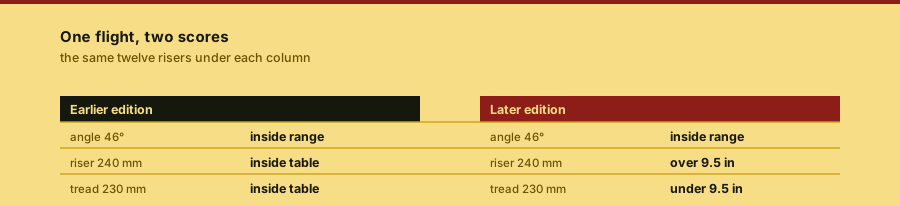
The flight fails three readings under the later edition and passes all six under the earlier one. Nothing about the stair changed between the two scores, which is the whole point of recording the edition.
Two editions, one flight: the same stair scored twice
written 2026-08-21kept by The Nosing Line (a named line, not a person)
What was compared
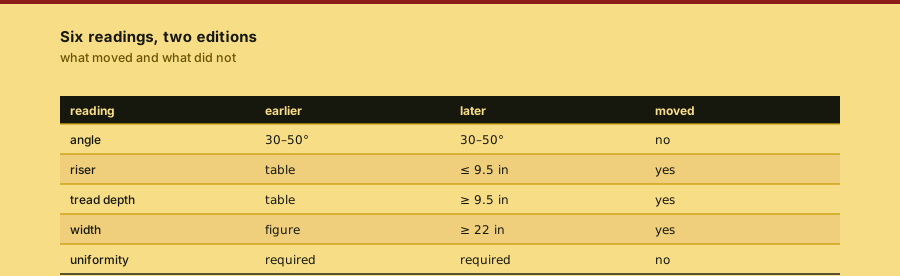
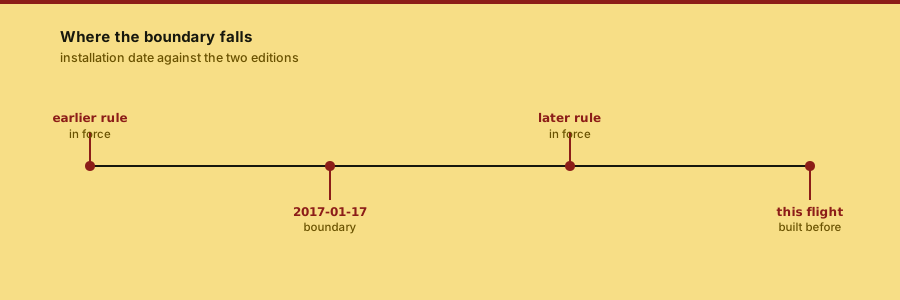
The workplace stair rule was rewritten with an installation-date boundary. Stairs installed before 17 January 2017 are not held to the riser and tread depth figures of the later rule; they are deemed compliant if they meet the earlier dimension table or achieve the angle range. A stair that satisfies the angle range and the earlier table therefore passes, and the same stair measured against the later figures can fail.
| Reading | Earlier edition | Later edition | Changed |
|---|---|---|---|
| angle range | 30–50° | 30–50° | no |
| riser | earlier table | ≤ 9.5 in | yes |
| tread depth | earlier table | ≥ 9.5 in | yes |
| width | earlier figure | ≥ 22 in | yes |
| uniformity | required | required | no |
| landing depth | not stated | ≥ 30 in | new |
What the flight read
The flight is a 46 degree plant-room stair with a 240 mm riser and a 230 mm going on twelve risers. Under the earlier table that combination sits inside the permitted dimensions and the angle range is satisfied, so the stair is deemed compliant. Under the later figures the riser exceeds 9.5 inches and the tread depth falls short of it, so the same stair fails two readings and the width reading as well.
The angle range did not move. That is the reading that makes the comparison useful: it tells you the document's authors decided the pitch was the durable requirement and the two dimensions were the revisable one. Every two-edition comparison on this line produces a reading like that, and it is the reading worth remembering.
What the record says
The record names both editions, the six readings, the three that changed, and the installation date that decides which column applies. It does not say the stair is compliant or non-compliant without naming the column, because the same sentence would be true and false at once.
The sentence a practitioner may dispute
A 46 degree plant-room stair with a 240 mm riser is not a defect. It is a stair that was built to the standard of its day for a room that three people enter each month, and the useful work is recording which column it falls in rather than arguing about whether it should be rebuilt. That position is defensible and it is also arguable, which is the point.
Documents checked
- 1Safety on stairs: (NIST publication record)supports the publication record behind the stair-safety figures this flight is scored against
- 2Working at heights (SafeWork NSW)supports the position that a risk-based assessment can sit alongside a prescriptive figure
- 3OHS Regulation Part 11 -- Fall Protection (WorkSafeBC)supports a jurisdiction that writes fall protection as a duty rather than a dimension
Each line points at one specific document, with its own title as the link text. No line is a home page and no line is a search result.
File this and go Close this note once you know which column applies to the stair. The comparison is only useful with the installation date attached.