Every stair document in the English-speaking market fixes a riser band and a going band, and most of them also fix the sum of twice the rise plus the going. A flight can pass the first test and fail the second.
Tread and riser: the geometry a flight is judged on
checked 2026-09-16rots yes — the figures above move with the editionkept by The Nosing Line (a named line, not a person)
Two bands, then a relationship
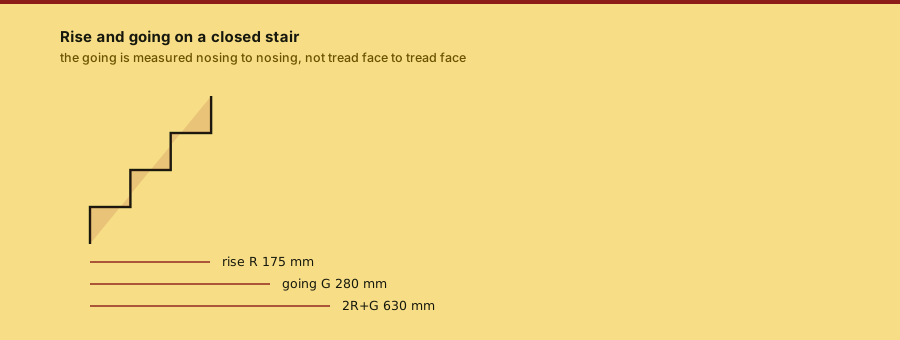
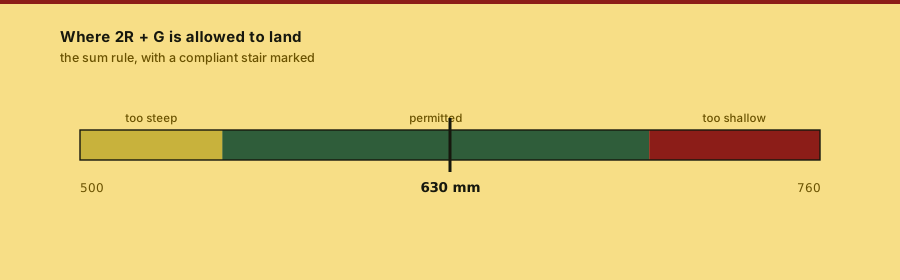
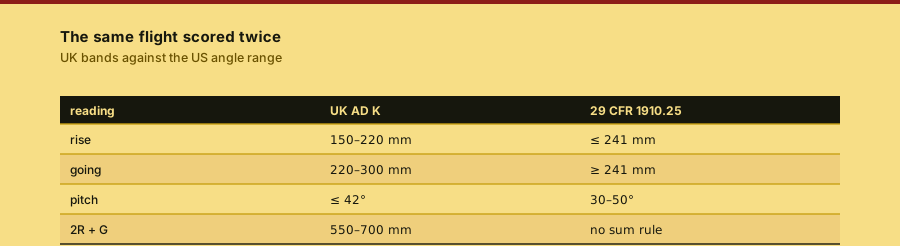
The British approved document prints three bands in one table. A private stair may rise between 150 and 220 mm and go between 220 and 300 mm. A utility stair may rise between 150 and 190 mm and go between 250 and 400 mm. A general access stair may rise between 150 and 170 mm and go between 250 and 400 mm. It then adds the relationship that ties the two together: twice the rise plus the going should land between 550 and 700 mm.
The American workplace rule is coarser. A standard stair must be installed between 30 and 50 degrees from the horizontal, with a maximum riser of 9.5 inches and a minimum tread depth of 9.5 inches, and the risers and tread depths must be uniform between landings. There is no sum rule, because the angle range does the same job.
| Stair type (UK AD K Table 1.1) | Rise min | Rise max | Going min | Going max |
|---|---|---|---|---|
| Private stair | 150 mm | 220 mm | 220 mm | 300 mm |
| Utility stair | 150 mm | 190 mm | 250 mm | 400 mm |
| General access stair | 150 mm | 170 mm | 250 mm | 400 mm |
The band that catches people out
A 220 mm rise is legal on a private stair. A 220 mm going is legal on a private stair. Put them together and 2R + G is 660 mm, which is also legal. Nothing about that stair is outside a printed figure, and yet it is the steepest thing the document permits: the maximum pitch for a private stair is 42 degrees, and this combination sits at 44.6 degrees. That is the failure the sum rule exists to catch, and it is why a flight can be dimensionally compliant and still refused.
Tread and riser are not the same as going and rise. The going is measured from nosing to nosing on a closed stair, which is longer than the physical tread by the amount of the overhang. Quoting a tread depth when the document asks for a going is the most common arithmetic error on a stair drawing.
What this page does not define
The nosing that makes the going longer than the tread is defined on the nosing page. The width a flight must clear is defined on the egress width page. This page owns the two vertical numbers and the relationship between them, and nothing else.
Documents checked
- 111 Safe movement and access -- ABCB Housing Provisions (NCC 2022)supports the Australian housing provisions that answer the same rise and going question
- 2Stair Geometry Standards (NAHB)supports the industry position on stair geometry standards alongside the code bands
- 3BS 5395-1:2010 Stairs. Code of practice for the design of stairs with straight flights and winders (BSI)supports the British code of practice for straight flights and winders
Each line points at one specific document, with its own title as the link text. No line is a home page and no line is a search result.
File this and go Close this page once you have both numbers and the sum. One of the three will be the one that fails.