The clause requires a rounded, graspable section and does not fix a shape. The research on which shapes are actually better does not agree, and the disagreement is wide enough that a specification built on it would be choosing a side rather than following a finding.
Handrail shape and graspability: where two studies disagree
written 2026-07-31kept by The Nosing Line (a named line, not a person)
What the clause asks for
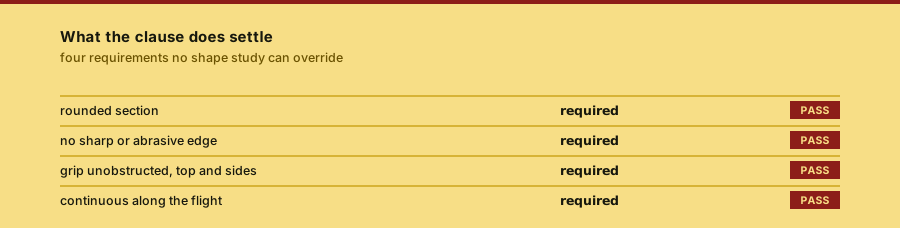
The accessibility standards require handrails to have circular or non-circular cross-sections with rounded edges, a gripping surface and adjacent surfaces free of abrasive or sharp elements, and a surface that is unobstructed on the top and the sides so a continuous grip can be maintained along the full length. They do not print a preferred shape, a preferred diameter or a preferred perimeter.
What the research argues about
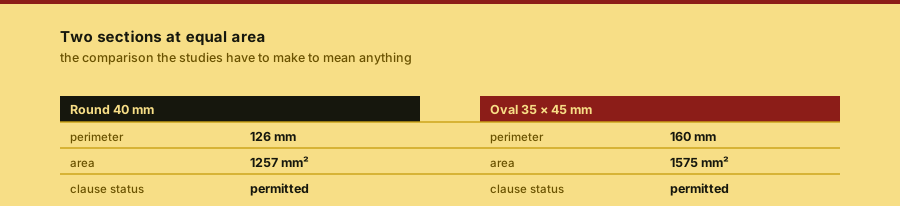
The published work on handrail cross-section falls into two groups. One group compares shapes and finds that the shape matters for how much force a hand can apply and how quickly it can be released. The other finds that the effect of shape is smaller than the effect of size, and that a study comparing a small oval against a large round is comparing size and calling it shape.
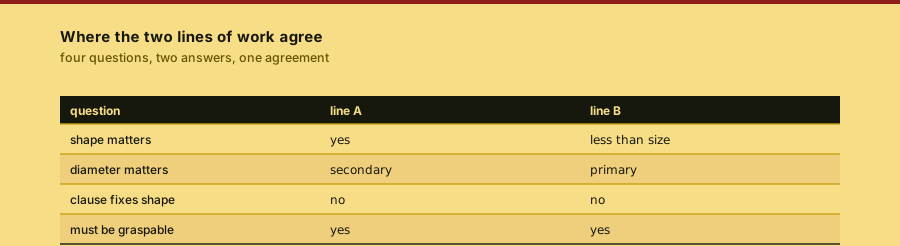
| Question | What one line of work reports | What the other reports |
|---|---|---|
| does shape matter | yes, for applied force | less than size does |
| does diameter matter | secondary to shape | primary |
| can the clause settle it | no shape is printed | no diameter is printed |
| what is agreed | rounded, continuous, unobstructed | same |
What that means for a specification
A specification that names a shape is making a choice the clause does not make and the evidence does not force. A specification that names a rounded section, a minimum clearance behind the rail and a continuous grip is following the clause and leaving the contested part open. The second specification is more defensible and it is also easier to satisfy on site, because it does not require a particular profile to be procured.
The clause does settle one thing that the research does not need to: the rail must be graspable and must not be interrupted. Whatever a study concludes about the best shape, a rail with a bracket that blocks the grip has failed a requirement that no shape study can rescue.
The sentence a practitioner may dispute
Choosing a handrail profile on the strength of a single graspability study is not a defensible specification, because the studies disagree and the clause does not take a side. That position is arguable by anyone who has fitted thousands of metres of rail and knows which profile people actually hold, and that practical objection is not answered by the literature.
Open on this line
No record on this line measures applied force on a real flight with a real population. That measurement would settle more than another comparison of profiles, and it has not been made here.
Documents checked
- 1Effect of handrail shape on graspability (Applied Ergonomics)supports one side of the disagreement about how handrail shape affects graspability
- 2The effect of handrail cross-sectional design and age on applied forces (Journal of Biomechanics)supports the other side, on cross-sectional design and the forces a hand applies
- 3Effect of handrail shape on graspability (Europe PMC record)supports the independent record of the graspability work that the two sides cite
Each line points at one specific document, with its own title as the link text. No line is a home page and no line is a search result.
File this and go Close this note once you know which part of the requirement the argument is about. The contested part is not the part that fails.